
Estás a mitad de un proyecto crítico cuando falla un ventilador de enfriamiento o se obstruye una boquilla, dejando tu máquina en silencio y tu plazo en riesgo. Es una realidad frustrante para muchos creadores, especialmente cuando la búsqueda de reparación de impresoras 3D Canada conduce a especificaciones técnicas confusas o piezas que tardan semanas en enviarse desde el extranjero. Entendemos que el tiempo de inactividad no es solo una molestia; es un obstáculo para tu creatividad. Comprar el tamaño de rosca incorrecto o un voltaje incompatible puede convertir una reparación sencilla en un dolor de cabeza total, y potencialmente causar aún más daño a tu hardware.
Mereces una máquina que trabaje tan duro como tú. Esta guía te ayudará a identificar las piezas de reemplazo adecuadas y las mejoras de alto rendimiento para mantener tu equipo funcionando con la máxima eficiencia. Te mostraremos cómo superar los problemas de compatibilidad y elegir componentes que realmente mejoren la calidad de tus impresiones. Al final de este artículo, tendrás un plan claro para organizar tu kit de mantenimiento y lograr un mejor rendimiento que nunca, todo mientras te ahorras trabajo innecesario y consigues tu equipo en un centro canadiense confiable.
Puntos clave
- Comprende cómo elegir componentes de alta calidad en lugar de alternativas económicas evita fallos de hardware y reduce el costoso trabajo y el tiempo de inactividad que frenan tus proyectos creativos.
- Aprende cuándo conviene mantener las piezas oficiales para un ajuste perfecto y cuándo actualizar a marcas premium como Micro Swiss o Capricorn para mejorar el rendimiento.
- Simplifica tu proceso de reparación de impresoras 3D Canada diagnosticando con precisión problemas comunes como ghosting o subextrusión e identificando los componentes específicos necesarios para solucionarlos.
- Explora cómo mantener la rigidez del marco obteniendo el hardware exacto que necesitas de una colección de más de 1.200 piezas, incluidos tornillos de precisión M2-M6 difíciles de encontrar.
- Descubre los beneficios de la experiencia local y el envío rápido a nivel nacional para mantener tu producción en marcha sin los riesgos de compatibilidad de la compra internacional.
Cómo abordar la reparación de impresoras 3D en Canada: por qué importan las piezas de calidad
Cuando tu impresora se detiene, tu productividad choca contra una pared. Para una pequeña empresa canadiense que usa fabricación aditiva para producción de bajo volumen, una máquina averiada representa ingresos perdidos y contratos retrasados. Incluso para los aficionados, el tiempo de inactividad significa un fin de semana de frustración creativa. Encontrar una reparación confiable de impresoras 3D Canada empieza por entender que los componentes que eliges hoy determinan con qué frecuencia tendrás que reparar tu máquina mañana. El mantenimiento proactivo siempre resulta más rentable que la reparación reactiva, especialmente si consideras el riesgo de que las piezas "económicas" causen un fallo catastrófico del hardware.
Comprar los componentes más baratos disponibles en mercados internacionales a menudo conduce a tolerancias deficientes y especificaciones incompatibles. Un cartucho calefactor con la resistencia incorrecta o una boquilla con un orificio interno irregular no solo producirá impresiones deficientes; también puede provocar descontrol térmico o daños permanentes en tu placa base. Comprender los procesos de impresión 3D específicos que utiliza tu máquina es el primer paso para seleccionar piezas que mantengan la integridad de tu equipo. Las piezas de alta calidad garantizan que tu impresora funcione con la misma fiabilidad que el día que la sacaste de la caja.
La ventaja del creador canadiense
Obtener tus componentes localmente elimina el dolor de cabeza de los aranceles y la aduana que suele acompañar a los pedidos internacionales. No tienes que preocuparte por cargos de gestión inesperados ni por piezas retenidas en aduana durante semanas mientras tu impresora permanece inactiva. Más allá de la rapidez del envío, el verdadero valor está en acceder a soporte técnico humano. Cuando no estás seguro de si un tornillo o ventilador específico es compatible con tu configuración, hablar con alguien que entiende el mercado canadiense y tu máquina concreta marca toda la diferencia. Apoyar un centro local también fortalece la comunidad nacional de creadores, asegurando que la experiencia especializada siga siendo accesible para todos, desde estudiantes hasta profesionales industriales.
Puntos de fallo comunes en las impresoras FDM modernas
Incluso las máquinas más robustas tienen componentes que se desgastan con el tiempo. Identificarlos a tiempo puede ahorrarte una avería total del sistema. Las áreas clave que debes vigilar incluyen:
- Componentes térmicos: Los cartuchos calefactores y los termistores están bajo tensión constante; un fallo aquí puede provocar fluctuaciones peligrosas de temperatura.
- La ruta de extrusión: Las boquillas son consumibles. Una boquilla desgastada provoca extrusión inconsistente y un acabado superficial deficiente.
- Movimiento mecánico: Las ruedas en V-slot y las correas se desgastan de forma natural. Las correas flojas provocan ghosting, mientras que los puntos planos en las ruedas causan movimientos irregulares a lo largo de los ejes.
Manteniendo un pequeño inventario de hardware esencial, como los tornillos de precisión M2-M6 que se encuentran en nuestra colección de 1.254 productos, puedes realizar reparaciones rápidas antes de que una pequeña vibración se convierta en una reparación mayor.
El dilema entre reparar y actualizar: cómo elegir tus componentes
Cuando falla un componente, te enfrentas a una decisión estratégica: ¿restauras la máquina a su estado de fábrica o aprovechas la oportunidad para mejorar su rendimiento? Para muchos que buscan reparación de impresoras 3D Canada, la intuición es encontrar una coincidencia exacta OEM (fabricante de equipo original). Mantenerse con piezas oficiales de Creality o Bambu Lab garantiza un ajuste perfecto, ya que estos componentes están diseñados para funcionar dentro de los límites eléctricos y físicos específicos de tu máquina. Es una opción fiable que minimiza la solución de problemas y te devuelve rápidamente a tu proyecto.
Sin embargo, los verdaderos beneficios de la fabricación aditiva residen en la flexibilidad para personalizar tu hardware y obtener mejores resultados. Marcas de posventa como Micro Swiss y Capricorn han construido su reputación resolviendo limitaciones de diseño comunes que se encuentran en las máquinas de serie. Por ejemplo, reemplazar un tubo PTFE genérico por un tubo Bowden Capricorn de alto rendimiento puede reducir significativamente la fricción y mejorar la consistencia de la retracción. A menudo son reemplazos "drop-in", lo que te permite lograr una mejor calidad de impresión sin necesidad de modificar el firmware ni reescribir el G-code.
Piezas OEM frente a piezas de posventa
Las piezas OEM son los componentes estándar que vienen con tu impresora de fábrica. Son excelentes para mantener una base de referencia, especialmente en modelos fáciles de usar para principiantes como la Ender 3. Las mejoras de posventa, en cambio, están diseñadas para escenarios de alto rendimiento. Si imprimes con materiales abrasivos como fibra de carbono, una boquilla de acero endurecido de un especialista de posventa es una necesidad, no un lujo. Al elegir, revisa cuidadosamente las listas de compatibilidad para asegurarte de que la nueva pieza no interfiera con tu cubierta de enfriamiento ni con el sensor de nivelación automática de la cama.
Evaluación de la vida útil de los componentes
Entender la vida útil de tus consumibles ayuda a prevenir fallos a mitad de impresión. Una boquilla de latón estándar suele funcionar bien durante unas 100 a 200 horas de impresión antes de que la geometría interna empiece a cambiar por el desgaste. Si notas que la calidad de impresión empieza a degradarse o ves un aumento de hilos, es señal de que la abertura de la boquilla ya no es un círculo perfecto. Del mismo modo, el tubo PTFE puede carbonizarse o deformarse con el tiempo si imprimes con frecuencia a temperaturas cercanas a 240 °C. Tener un programa de mantenimiento predictivo garantiza que reemplaces estos elementos antes de que provoquen una obstrucción que requiera desmontar todo.
No te sientas presionado a actualizar todas las piezas a la vez. Puedes equilibrar tu presupuesto obteniendo tornillos a granel asequibles y de alta calidad para el marco, mientras inviertes tus fondos en los componentes críticos que entran en contacto con el filamento. Al gestionar tu próximo proyecto de reparación de impresoras 3D Canada, recuerda que la elección de las piezas determina el tiempo de actividad a largo plazo de tu máquina. Si estás listo para empezar a montar tu kit de emergencia, revisa nuestra colección de piezas y accesorios para encontrar tanto reemplazos OEM fiables como mejoras premium.
Componentes esenciales: guía de piezas y accesorios
Mantener una máquina de alto rendimiento requiere más que solo saber qué está roto. Se trata de tener el equipo adecuado a mano antes de que ocurra el siguiente fallo. Nuestra colección incluye 1.254 productos en la categoría de Piezas y Accesorios, seleccionados específicamente para afrontar las exigencias únicas de la reparación de impresoras 3D Canada. Ya sea que estés ajustando un marco con tornillos de precisión o renovando un sistema de enfriamiento, la calidad de estos pequeños componentes determina el éxito final de tu impresión.
La rigidez del marco suele pasarse por alto, pero sigue siendo esencial para la impresión a alta velocidad. Tenemos el hardware específico que normalmente es difícil de encontrar por separado, como juegos de tornillos M2-M6, garantizando que tu montaje se mantenga perfectamente escuadrado. Para quienes llevan sus máquinas al límite, el siguiente frente es el enfriamiento. Actualizar a un Blower Fan 5015 24V mejora drásticamente el rendimiento en voladizos al entregar un flujo de aire de alta velocidad exactamente donde los ventiladores de serie suelen quedarse cortos.
Piezas de extrusión de alto rendimiento
El Micro Swiss All Metal Hotend Kit sigue siendo el estándar de referencia para quienes desean imprimir materiales más allá del PLA básico. Elimina el revestimiento interno de PTFE, permitiendo la impresión a alta temperatura sin riesgo de degradación. Si te limitas a filamentos estándar, la Official Creality Brass MK8 Nozzle (0.4mm) ofrece un ajuste fiable y de bajo costo. También recomendamos mantener variantes de 0.6 mm para impresiones funcionales más rápidas. Ten siempre cerca un paquete de 10 brocas de limpieza de boquilla de 0.4 mm; son la forma más rápida de eliminar una pequeña obstrucción sin desmontar todo.
Movimiento fiable y estabilidad de la cama
Un movimiento fiable es una piedra angular de la reparación eficaz de impresoras 3D Canada. La holgura en los ejes provoca defectos visibles e impresiones fallidas. Las Official Creality V-Slot POM Wheels proporcionan el movimiento suave y resistente al desgaste necesario para mantener alineadas tus capas. Para resolver el problema tan común de tener que nivelar constantemente la cama, cambia los muelles de serie por Official Creality Pressure Heatbed Springs. Estos componentes más rígidos mantienen su tensión durante mucho más tiempo. Para cualquier conjunto propenso a vibraciones, usa Nyloc Hex Nuts. El inserto de nylon evita que la tuerca se afloje durante trabajos de impresión de 48 horas, una solución simple que ahorra horas de calibración.
Tubo PTFE: series XS y TL
Elegir el tubo Bowden adecuado es el secreto para imprimir con éxito filamentos flexibles. La Capricorn Premium PTFE XS Series presenta un diámetro interno ajustado y alta lubricidad, lo que la convierte en la mejor opción para filamento de 1,75 mm. Si prefieres supervisar visualmente el filamento, la Capricorn TL Series ofrece una opción translúcida que no sacrifica calidad. Asegúrate de combinar estos tubos con el Pneumatic Push-In Fitting correcto, como PC4-M6 o PC4-01, para evitar que el tubo se deslice durante retracciones agresivas.
Síntomas y soluciones: encontrar la pieza de reemplazo adecuada
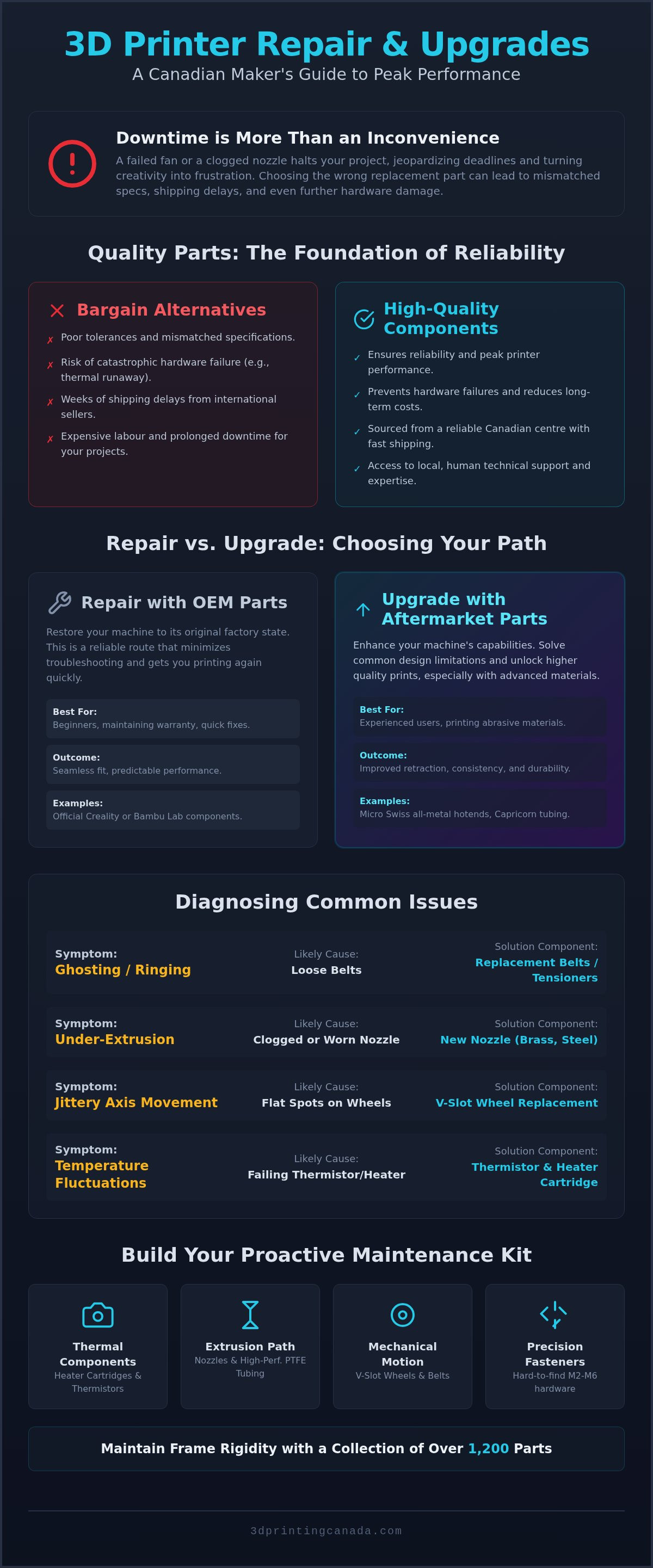
Diagnosticar un problema de hardware suele llevar más tiempo que la reparación física en sí. Si tu extrusor empieza a hacer clic o notas huecos en tus capas, probablemente estés lidiando con subextrusión. Esto suele ser el resultado de una boquilla parcialmente obstruida o de un tubo PTFE que se ha degradado en la interfaz del hotend. Cambiar a una boquilla nueva o recortar el extremo de tu tubo Bowden puede resolver el problema de inmediato. Estos pequeños ajustes son el pan de cada día de la reparación de impresoras 3D Canada, ayudándote a mantener una producción constante sin una revisión total del sistema.
El ghosting o las ondulaciones en tus impresiones sugieren holgura mecánica en algún punto del pórtico. Revisa la tensión de las correas; deben estar tensas, pero no demasiado estiradas. Al mismo tiempo, inspecciona tus ruedas V-slot en busca de puntos planos o exceso de polvo, que pueden causar movimientos irregulares a lo largo de los ejes. Para problemas críticos de seguridad como errores de Thermal Runaway, la solución suele encontrarse en el cableado. Estos errores normalmente indican un cartucho calefactor defectuoso o un termistor que no informa temperaturas precisas. Reemplazar estos pequeños componentes electrónicos es un procedimiento estándar que mantiene tu taller seguro y tu máquina operativa.
Si te encuentras nivelando la cama después de cada impresión, es probable que tus muelles de serie sean demasiado débiles para mantener su tensión. Actualizar a muelles de la cama calefactada más rígidos proporciona la resistencia necesaria para evitar que las ruedas de ajuste se aflojen por vibración durante trabajos de impresión largos. Identificar estas correspondencias específicas entre "síntoma y pieza" te permite explorar nuestra colección de piezas con confianza, sabiendo exactamente qué componente solucionará tu problema.
Herramientas de diagnóstico que todo creador necesita
Una solución de problemas exitosa requiere algunas herramientas esenciales en tu kit. Una broca de limpieza de boquilla es tu primera línea de defensa contra obstrucciones menores, ya que te permite eliminar residuos sin desmontar el hotend. También recomendamos tener a mano un surtido de tornillos métricos; disponer del tornillo M2-M6 correcto durante una reparación inesperada evita que una solución simple se convierta en un retraso de una semana. Por último, revisa siempre si hay "heat creep" si experimentas atascos a mitad de impresión. Esto ocurre cuando la parte fría de tu hotend se calienta demasiado, a menudo debido a un ventilador de la cubierta defectuoso o a un disipador sucio.
Cuándo buscar servicios profesionales de reparación de impresoras 3D
Aunque muchos problemas mecánicos se pueden resolver por cuenta propia, algunos requieren un enfoque más técnico. Los fallos de la placa base, la resolución de problemas eléctricos complejos y la alineación estructural del marco suelen ser mejor manejados por expertos. Si tu máquina ha sufrido un cortocircuito eléctrico importante o el marco ha quedado torcido, una calibración profesional garantiza que la unidad esté segura y correctamente escuadrada. Puedes acceder a servicios profesionales de reparación de impresoras 3D Canada cuando un proyecto supera tu conjunto actual de herramientas o las limitaciones de tiempo. Nuestros técnicos pueden ayudarte a aprovechar todo el potencial de tu máquina mediante pruebas de diagnóstico expertas y un reemplazo preciso de componentes.
Cómo ampliar tu configuración: soporte profesional y envío rápido en todo Canada
Ampliar tu operación de impresión 3D requiere pasar de las reparaciones reactivas a una estrategia de mantenimiento proactiva. Tanto si gestionas una sola máquina en una oficina doméstica como una flota para una pequeña empresa, el acceso fiable a la reparación de impresoras 3D Canada garantiza que tu producción nunca se detenga. Hemos diseñado nuestra logística para ofrecer disponibilidad a nivel nacional de componentes críticos, cerrando la brecha entre los creadores locales y las piezas especializadas que necesitan. Esta red de envío nacional está respaldada por soporte técnico real de personas que realmente usan estas máquinas, dándote la confianza de elegir los accesorios correctos a la primera.
Organizar tu espacio de trabajo es el siguiente paso para aprovechar todo el potencial de tu impresora. Cuando tienes un inventario dedicado de tuercas hexagonales y tornillos, pasas menos tiempo buscando un tornillo caído y más tiempo perfeccionando tus impresiones. Este nivel de preparación te permite implementar mejoras de alta velocidad sin el temor de que un pequeño fallo mecánico provoque un tiempo de inactividad prolongado. Nuestro enfoque orientado a la comunidad significa que estamos aquí para ayudarte a superar los retos técnicos, asegurando que la tecnología avanzada siga siendo accesible para todos, desde aficionados hasta profesionales industriales.
Cómo equipar tu banco de reparación
Un banco bien surtido es la marca de un creador profesional. Invertir en un paquete de 10 tornillos métricos de acero inoxidable siempre resulta más eficiente que comprar piezas sueltas según las necesites. Estos pequeños elementos de hardware son la base de la estabilidad del marco y del montaje de componentes. Tu kit de emergencia también debe incluir repuestos esenciales como boquillas, ventiladores de enfriamiento y racores neumáticos. Para quienes utilizan máquinas modernas de alta velocidad, nuestra guía de accesorios Bambu Lab Canada ofrece un análisis profundo de las piezas específicas necesarias para mantener un rendimiento óptimo en plataformas más nuevas.
¿Listo para reparar tu impresora?
No dejes que una pieza rota te impida continuar con tu próximo proyecto. Puedes explorar nuestra colección completa de 1.254 productos para encontrar exactamente lo que necesitas y volver al camino correcto. Priorizamos el envío rápido en todo el país para minimizar tu tiempo de inactividad y maximizar tu producción creativa. Nuestro objetivo es ser tu socio de confianza en cada proyecto de reparación de impresoras 3D Canada que emprendas. Cuando estés listo para actualizar o reemplazar un componente desgastado, compra la colección de Piezas y Accesorios de 3D Printing Canada para encontrar soluciones de grado profesional que mantengan tu taller funcionando con la máxima eficiencia.
Domina el mantenimiento y optimiza el rendimiento
Un mantenimiento eficaz transforma tu máquina de una fuente de frustración en una herramienta fiable para la innovación. Al elegir componentes de alta calidad y comprender los síntomas específicos del desgaste, puedes reducir significativamente el tiempo de inactividad. Ya sea que estés realizando un simple cambio de boquilla o una renovación estructural completa, contar con un socio local de confianza hace que el proceso sea fluido. Nuestro equipo está dedicado a tu éxito, proporcionando soporte técnico profesional de parte de técnicos de N3 Technologies siempre que un proyecto se vuelva complejo.
Mantenemos un inventario de más de 1.200 productos para asegurarnos de que nunca tengas que esperar semanas por un envío internacional. Desde tornillos de precisión M2-M6 hasta hotends de alta gama, contamos con existencias para afrontar cualquier proyecto de reparación de impresoras 3D Canada. Toma hoy el control de tu taller y aprovecha todo el potencial de tu hardware. Con envío rápido a nivel nacional en todo el país, las piezas que necesitas siempre están al alcance.
Explora más de 1.200 piezas y accesorios para impresoras 3D
No dejes que una pequeña rotura detenga tu creatividad. Sigue imprimiendo y sigue construyendo.
Preguntas frecuentes
¿Cómo sé si necesito un ventilador de 12V o 24V para mi impresora 3D?
Revisa la etiqueta de tu ventilador actual o la clasificación de salida de la fuente de alimentación de tu impresora. La mayoría de las máquinas modernas usan 24V, mientras que los modelos más antiguos o ciertos kits DIY pueden depender de 12V. Conectar un ventilador de 12V a un sistema de 24V hará que se queme de inmediato, mientras que un ventilador de 24V en un sistema de 12V girará demasiado lento para proporcionar una refrigeración adecuada. Este detalle es crucial para mantener tu hardware durante un proyecto de reparación de impresoras 3D Canada.
¿Cuál es la diferencia entre los tornillos M3, M4 y M5 en la impresión 3D?
Estas denominaciones se refieren al diámetro exterior de la rosca del tornillo en milímetros. Los tornillos M3 tienen un diámetro de 3 mm y suelen utilizarse para montar ventiladores y sensores pequeños. Los tornillos M4 (4 mm) y M5 (5 mm) son el estándar para el montaje estructural del marco y la fijación de motores paso a paso. Tener un surtido de estos tornillos es esencial porque distintos componentes requieren longitudes y diámetros específicos para mantener la rigidez del chasis de tu máquina durante una reparación.
¿Vale la pena pagar más por el tubo PTFE Capricorn que por el tubo blanco estándar?
El tubo PTFE Capricorn es una mejora significativa porque tiene un punto de fusión más alto y tolerancias internas más ajustadas que el tubo blanco estándar. Soporta de forma segura temperaturas de hasta 300 °C, lo que evita que el tubo se degrade y libere humos tóxicos. La menor fricción interna también mejora la consistencia de la retracción, lo que lleva a menos obstrucciones y a un mejor acabado superficial. Es una forma rentable de lograr resultados profesionales sin reemplazar todo tu sistema de extrusión.
¿Puedo usar una boquilla de 0,6 mm en una impresora que venía con una boquilla de 0,4 mm?
Sin duda puedes usar una boquilla de 0,6 mm, siempre que actualices los ajustes de tu laminador para reflejar el nuevo diámetro. Una boquilla de 0,6 mm permite extrusiones más anchas y capas más gruesas, lo que puede reducir el tiempo total de impresión en casi un 50 % en piezas funcionales grandes. Aunque pierdes una pequeña cantidad de detalle fino en los ejes X e Y, el aumento de la resistencia estructural y la menor duración de impresión la convierten en una opción popular para muchos creadores canadienses.
¿Cuáles son las señales de que el hotend de mi impresora 3D necesita ser reemplazado?
Busca obstrucciones persistentes que no se eliminen con una aguja, filamento que se filtre desde la parte superior del bloque calefactor o temperaturas inconsistentes. Si ves plástico carbonizado alrededor del heat break o experimentas atascos frecuentes a mitad de impresión, es probable que los componentes internos se hayan degradado. Sustituir todo el conjunto del hotend suele ser más fiable que intentar arreglar varias pequeñas fugas, especialmente cuando necesitas volver a poner tu máquina en producción rápidamente para un proyecto con plazo ajustado.
¿Cómo encuentro el racor neumático correcto para mi extrusor Bowden?
Mide el diámetro de la rosca en tu extrusor o hotend y el diámetro exterior de tu tubo. La mayoría de los sistemas Bowden para filamento de 1,75 mm utilizan un racor PC4-M6 (rosca de 6 mm) o un racor PC4-01 (rosca de 9,7 mm). Asegúrate de que el racor tenga un agarre interno firme para evitar que el tubo se salga durante las retracciones. Si no estás seguro, nuestro equipo puede ayudarte a identificar el hardware específico necesario para completar tu mantenimiento de forma segura y eficaz.
¿3D Printing Canada ofrece soporte técnico si compro una pieza y no puedo instalarla?
Brindamos soporte técnico experto a través de nuestros técnicos experimentados de N3 Technologies para ayudarte durante el proceso. Si compras una pieza y consideras que la instalación es demasiado compleja, puedes acceder a nuestros servicios profesionales de reparación de impresoras 3D Canada para asegurarte de que el componente se instale correctamente. Actuamos como un mentor experto para la comunidad, ofreciendo tanto las piezas de alta calidad que necesitas como el apoyo humano requerido para que tus proyectos creativos sigan avanzando.
¿Por qué debería elegir tornillos de acero inoxidable en lugar de los galvanizados con zinc para mi impresora?
Los tornillos de acero inoxidable son superiores porque ofrecen una excelente resistencia a la corrosión y no tienen un recubrimiento que pueda desprenderse con el tiempo. Los tornillos galvanizados con zinc pueden oxidarse si tu taller está en un ambiente húmedo o en un sótano. El acero inoxidable ofrece un aspecto más limpio y mantiene su integridad estructural durante más tiempo, lo que es vital para las partes móviles y las áreas propensas a vibraciones de tu impresora. Es una pequeña inversión que garantiza que tu marco se mantenga sólido durante años.