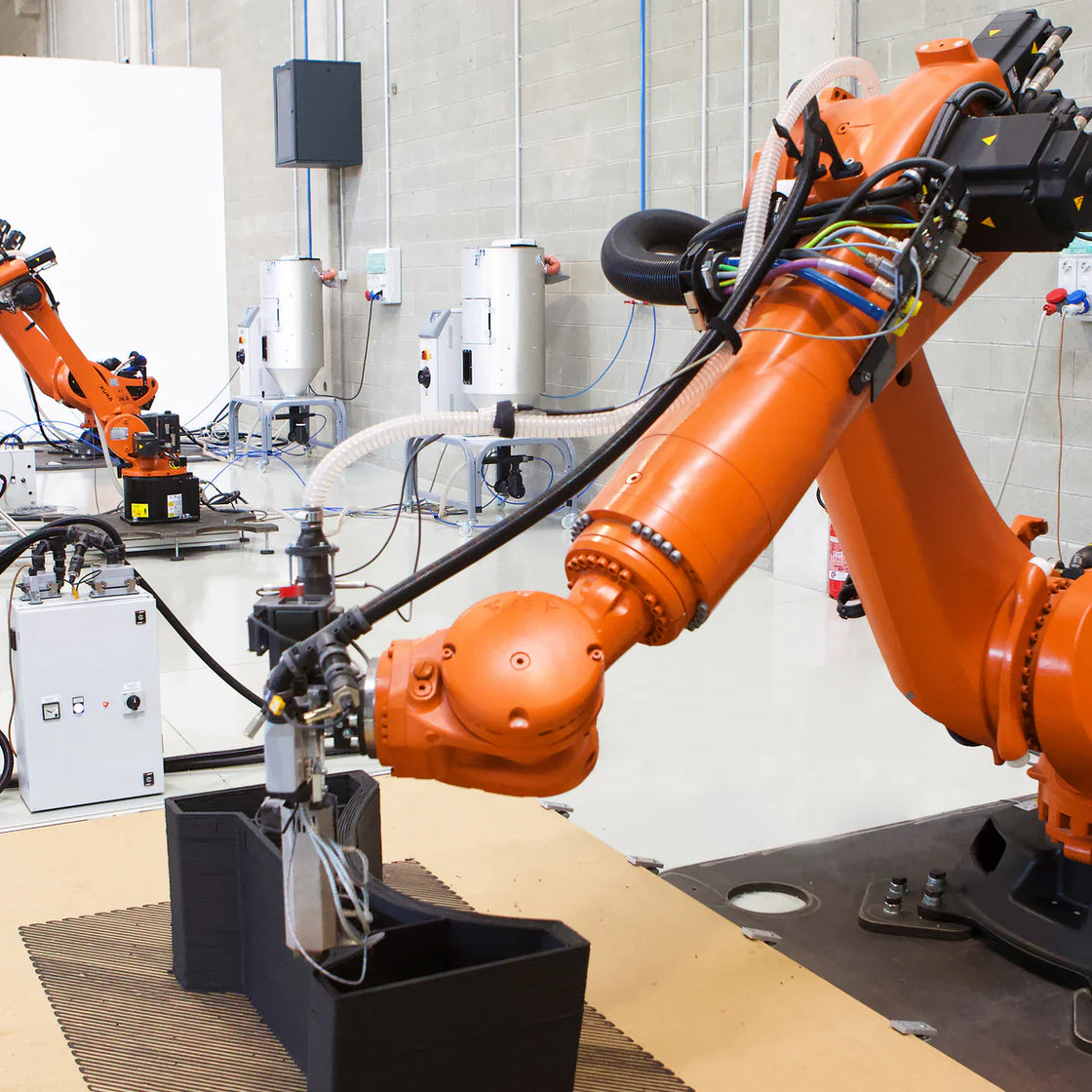
Soluciones de fabricación aditiva a gran escala para Caracol
Para la producción de polímeros, compuestos y metales
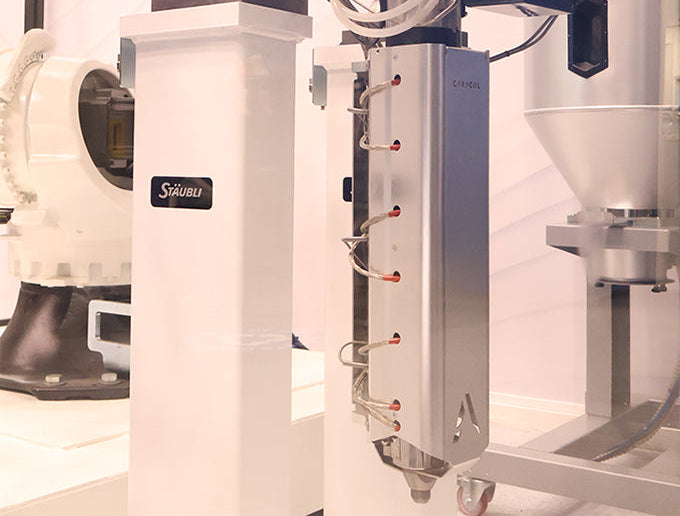
La fabricación está evolucionando más allá de las limitaciones del mecanizado, el moldeo y la fabricación de utillaje tradicionales. Caracol desarrolla plataformas avanzadas de fabricación aditiva robótica que permiten a los fabricantes producir componentes grandes de polímeros, compuestos y metales con mayor rapidez, eficiencia y libertad de diseño.
Desde sistemas de extrusión de pellets para piezas sobredimensionadas de termoplástico y compuestos hasta celdas de fabricación aditiva híbrida y CNC y fabricación aditiva de metales en gran formato, Caracol ofrece plataformas de producción configurables diseñadas para las exigencias de la industria moderna.
Ya sea que su objetivo sea acelerar el desarrollo de productos, reducir los costos de utillaje, producir componentes de uso final o ampliar la capacidad de fabricación, Caracol proporciona soluciones escalables que crecen con su operación.
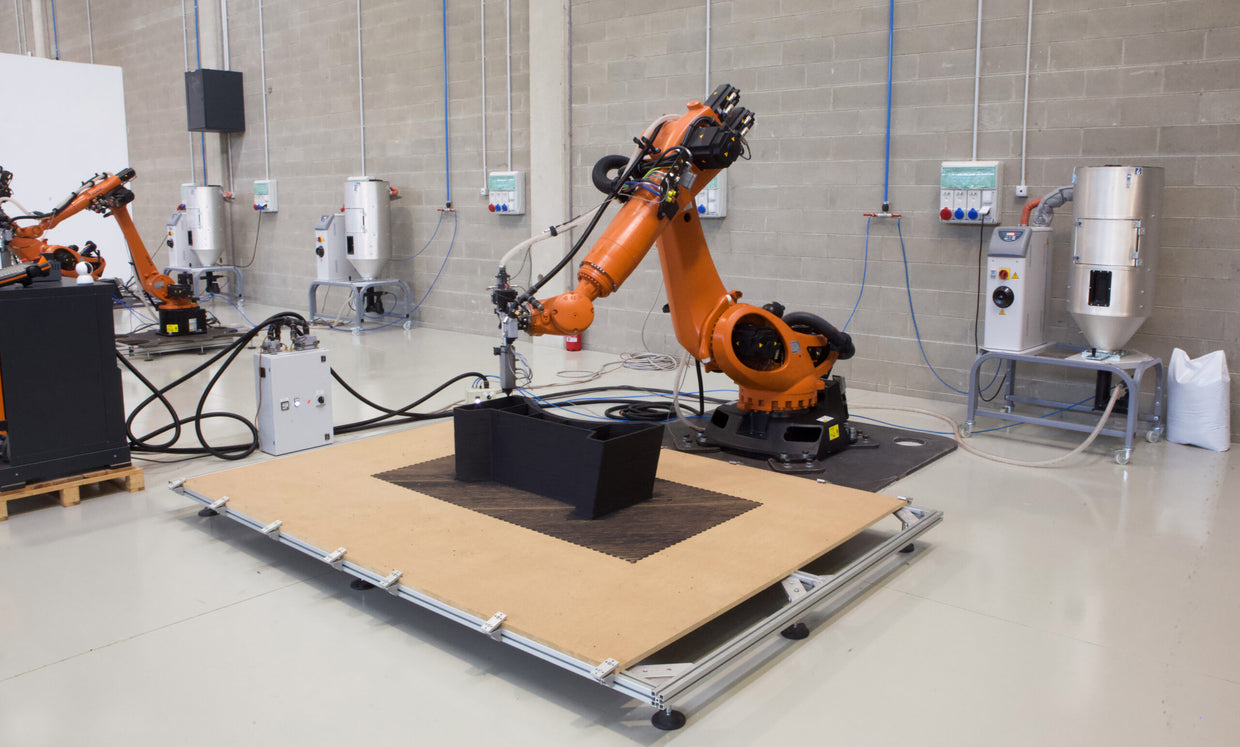
Plataformas de fabricación diseñadas en torno a su proceso
Caracol ofrece múltiples soluciones de fabricación robótica diseñadas para respaldar distintas necesidades de producción, desde la impresión de polímeros y compuestos en gran formato hasta flujos de trabajo de fabricación aditiva híbrida y CNC, así como la fabricación de metales a gran escala. En lugar de obligar a los fabricantes a ajustarse a una sola máquina o proceso, Caracol crea plataformas configurables que pueden adaptarse al tamaño de la pieza, los requisitos del material, los objetivos de producción, el espacio disponible en planta y los planes de automatización futuros.
Caracol Destacados
Explorar Caracol DestacadosNo se encontraron productos
Beneficios y características de Caracol-AM
- Increased precision: Robotic arm 3D printers offer high precision and accuracy, which is critical for creating complex geometries and intricate designs.
- Greater flexibility: The robotic arm's ability to move in multiple axes provides greater flexibility when printing, allowing for more intricate and detailed designs.
- Increased speed: Robotic arm 3D printers can print faster than traditional 3D printers because they can move in multiple axes simultaneously.
- Large print volume: Robotic arm 3D printers can often handle larger print volumes than traditional 3D printers, allowing for the creation of larger or more complex designs.
- Reduced labor costs: Robotic arm 3D printers require less human intervention, reducing the need for manual labor and cutting costs associated with labor.
- Improved consistency: Robotic arm 3D printers can consistently produce high-quality prints, reducing the risk of defects and errors in the printing process.