Zaxe 3D Printers
Industrial 3D Scanners & Metrology Solutions
Shining3D provides industrial-grade 3D scanning technologies designed for manufacturers, engineers, educators, and product development teams requiring accurate digital capture, inspection capability, and efficient scanning workflows. From portable handheld scanners to advanced metrology systems, Shining3D solutions support modern manufacturing and engineering environments with scalable digital inspection and reverse engineering capabilities.

Professional 3D Scanning & Metrology Solutions from Shining3D
Shining3D develops professional and industrial 3D scanning technologies used across manufacturing, quality control, engineering, product design, and research applications. Their product ecosystem includes handheld 3D scanners, metrology-grade scanning systems, automated inspection solutions, and digital workflow tools designed to support modern industrial environments.
Shining3D systems are widely used for reverse engineering, dimensional inspection, CAD comparison, rapid product development, and digital archiving. Their portfolio supports both portable scanning workflows and structured inspection processes for production environments requiring repeatable measurement capability and reliable data acquisition.
The company’s technology focus centers on accessible industrial scanning, workflow efficiency, and compatibility with modern engineering and manufacturing software ecosystems. Shining3D scanners are commonly integrated into workflows involving CAD modeling, additive manufacturing, tooling validation, and production quality control.

Handheld 3D Scanners
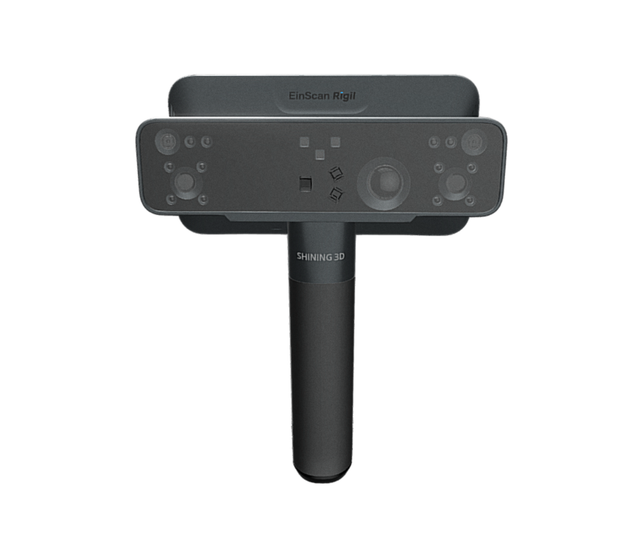
Portable handheld scanners suitable for large parts, difficult geometries, and mobile scanning environments. Frequently used in manufacturing, automotive, tooling, and field-service applications.

Metrology 3D Scanners
Metrology-grade scanning systems developed for dimensional analysis, production verification, and quality control applications requiring reliable measurement data and repeatable scanning performance.
3D Scanning Software
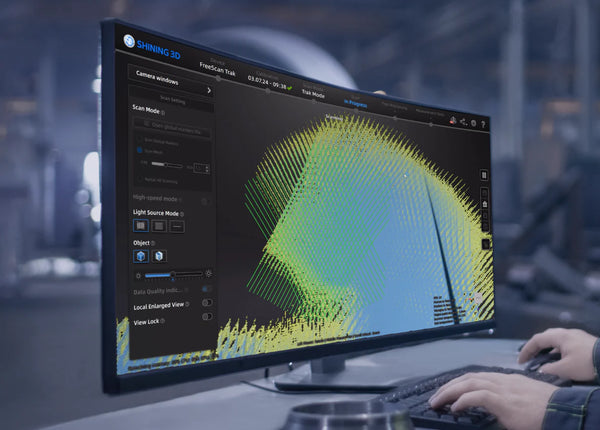
Scanning software platforms that support mesh processing, alignment, inspection analysis, CAD integration, and workflow optimization for engineering and manufacturing environments.
Featured Products
Explore Shining3D
Shining3D provides industrial-grade 3D scanning technologies designed for manufacturers, engineers, educators, and product development teams requiring accurate digital capture, inspection capability, and efficient scanning workflows. From portable handheld scanners to advanced metrology systems, Shining3D solutions support modern manufacturing and engineering environments with scalable digital inspection and reverse engineering capabilities.